Companion Planting

Similar names: trap cropping, intercropping, plant association 

Companion planting is an agricultural technique wherein various crops are grown close together to enhance growth, control pests, optimise space and boost productivity. While companion planting is associated with small-scale gardening, the general principles can be broadly integrated into large-scale operations. This approach is considered a low-input and ecologically mindful method for pest management. Rooted in traditional ecological knowledge, this technique focuses on creating mutually beneficial relationships between plants. One of the most common examples of companion planting is the Three Sisters, which is a traditional Native American growing practice that includes corn, beans and squash. Each plant serves a specific role that benefits the other crops in various ways.
Biochar

Similar names: agrichar, biocarbon 

Biochar is charcoal made from organic matter such as wood, plant materials, and manure. The organic matter is heated at high temperatures of between 300-900 ℃, with very little oxygen. Biochar is carbon rich, absorbent and does not break down easily like other soil enhancers, therefore it is able to stay in the soil for long periods of time. Thus, it can reduce the need for frequent application of compost while still promoting healthy crop growth. Biochar is a soil amendment that improves soil health by aerating the soil, as well as retaining moisture and nutrients in the soil. Additionally, due to the low oxygen burning method, carbon is locked into the soil instead of being released back into the environment. The materials used for processing biochar can range from small-scale and simple to more complex and commercial.

Cover Cropping

Similar names: green manure, living mulch, soil-building crops, catch crops

Cover cropping has been used across the world throughout history. However, as the rise of synthetic herbicides and fertilizers became more popular, the use of cover crops declined. In recent years, concerns over soil health and the desire to reduce chemical inputs has sparked renewed interest in cover crop techniques. Unlike cash crops, cover crops are grown for environmental benefits rather than for profit. Cover crops are typically grown in the off-season following the harvest of a main cash crop. They are typically mowed, incorporated into the soil, or used as mulch. Cover crops offer a wide array of benefits as they help to improve soil health, control erosion, suppress weeds, improve yields, and attract pollinators. There are a large variety of cover crops to choose from, however the choice of cover crop depends on the goal of the grower.

Riparian Buffer Zones

Similar names: Conservation buffers, Stream corridor bank enhancement, Riparian buffer strips and hedges, Terrestrial buffers, Riparian buffer systems

Riparian buffer zones are the interface between land and a river, stream or creek often characterised by riparian woodlands, forests and riparian strips. The plant habitats and natural communities along the river banks are better known as riparian vegetation and they are characterised by hydrophilic plants, bushy vegetation and forest systems. The presence of riparian buffer zones is crucial due to their role as natural biofilters and their protection of aquatic environments from excessive sedimentation, polluted surface runoff and erosion. Furthermore, they provide shelter, shade and food for many aquatic species.

Often the riparian zones are damaged by various anthropogenic activities such as agriculture, construction and silviculture. In this case, biological restoration can take place, with the most common practices being erosion control and revegetation. Furthermore, in some places riparian zones are fully lacking and reintroducing them could bring plenty of benefits to the local ecosystems. Because of the great biological function these systems have in supporting a diversity of species and landscapes, they are in some places subject to national protection mechanisms.

Initiating and restoring riparian buffers is crucial for the healthy functioning of riparian ecosystems. The vegetation around the banks of the river slows the flow of water which controls the power of the river and the destruction that could occur downstream. When near agricultural land, the riparian buffers filter various pollutants from agricultural runoffs, enhancing water quality via biofiltration. 

Disclaimer: Check whether Riparian Buffer Zones are subject to national protection in your area, as this could help with their protection and restoration.

Muvuca Direct Seeding

Similar names: Seed-based land restoration, Direct sowing

Muvuca direct seeding is a nature restoration method, where a mix of seeds from dozens of native species at different successional stages are planted simultaneously into the ground. The method mimics natural regeneration mechanisms such as seed soil banks and seed rain. Better known conventional practice is direct seeding’s popular counterpart – transplanting, which is a technique of moving plants from one location to another, usually to preserve the optimal condition of the seedlings. Despite providing more control over the plant’s growth, transplanting doesn’t allow for a high variety of plant seeds to grow simultaneously.

The Muvuca system uses a high diversity of species and ensures longer-term operational efficiency, which in return enables mechanised restoration with reduced planting, low maintenance in terms of time and reduced costs. Planting can be done either manually or mechanised (using machinery such as tractors), which enables the scalability of the intervention. Furthermore, the grown plants through Muvuca become more robust and resistant to various weather conditions, which results in stronger root systems and overall healthier vegetation. Overall, Muvuca direct seeding can contribute to the scaling up of restoration efforts, while reducing costs and increasing the species diversity. Meanwhile, the demand for native species enables the promotion of conservation and well-being.

Composting

Similar names: Organic Amendments

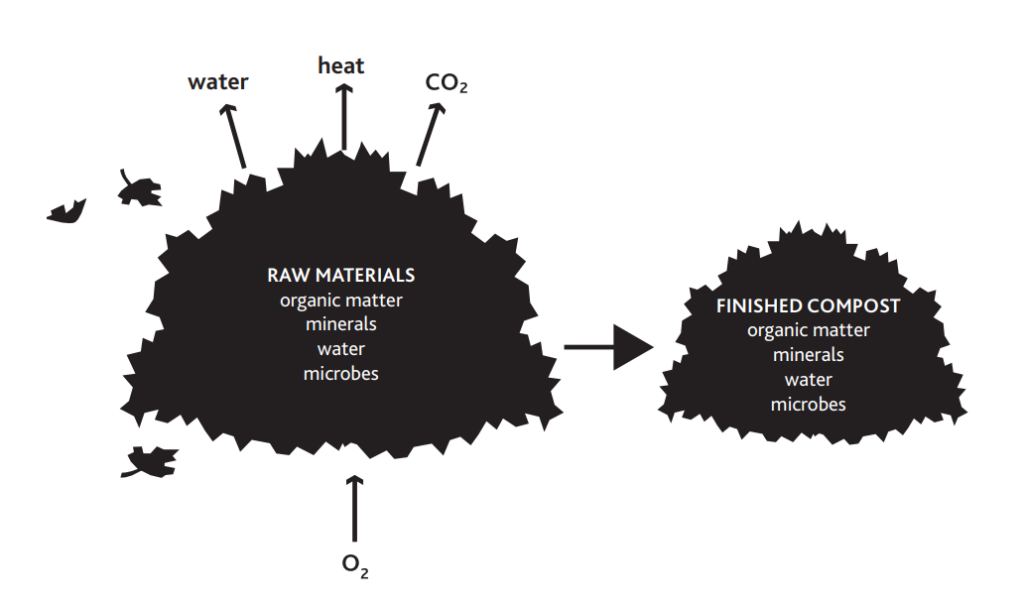
Composting is an effective method of organic waste management, involving the controlled aerobic decomposition of organic matter, such as plant and animal waste. This process results in Compost, a stable, humus-like material that can be directly applied to soil. The primary goal of Composting is to reduce the amount of organic waste sent to landfills while providing economic, environmental, and social benefits. When used in soil, Compost enriches it, reducing the need for chemical fertilizers and lowering potential methane emissions from landfills.

The Composting process (Source)

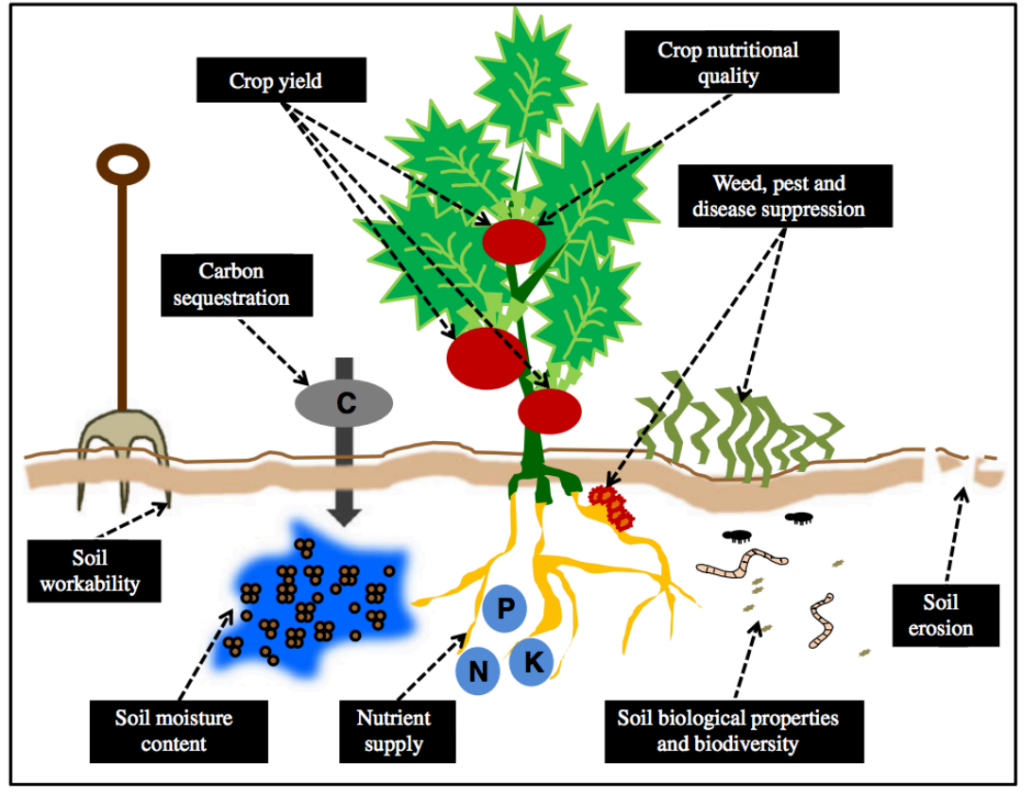
Due to its recycling nature, Composting is a cost-effective tool for managing organic waste, utilizing leftover materials from land-based processes. It offers a range of co-benefits that enhance land and soil regeneration practices. Agronomically, Composting supports crop yields, improves soil moisture content and workability, enhances crop nutritional quality, and suppresses weeds, pests, and diseases. Additionally, Composting provides broader environmental benefits by supplying essential nutrients (such as mineralized nitrogen, phosphorus, and potassium), reducing soil erosion, sequestering carbon, and improving soil biological properties and biodiversity.

Furthermore, Compost can be used as a mulching material in landscaping, garden management, and the restoration of abandoned quarries, among other applications.

Agricultural benefits of Composting (Source)

Assisted Natural Regeneration

Similar names: Pruning, Kisiki Hai, Managed Regrowth

Assisted Natural Regeneration (ANR) is a simple, low-cost forest restoration method that can effectively convert deforested and degraded lands into productive forests and rangelands. The method uses a blend of active planting and passive restoration techniques, which help vegetation to naturally recover by eliminating barriers and threats to their growth. ANR is similar to Farmer-Managed Natural Regeneration (FMNR), with the difference that ANR applies to degraded forest lands and rangelands while FMNR is usually practised on croplands. Overall, ANR mimics the natural systems and habitats by supporting the land processes through ANR. 

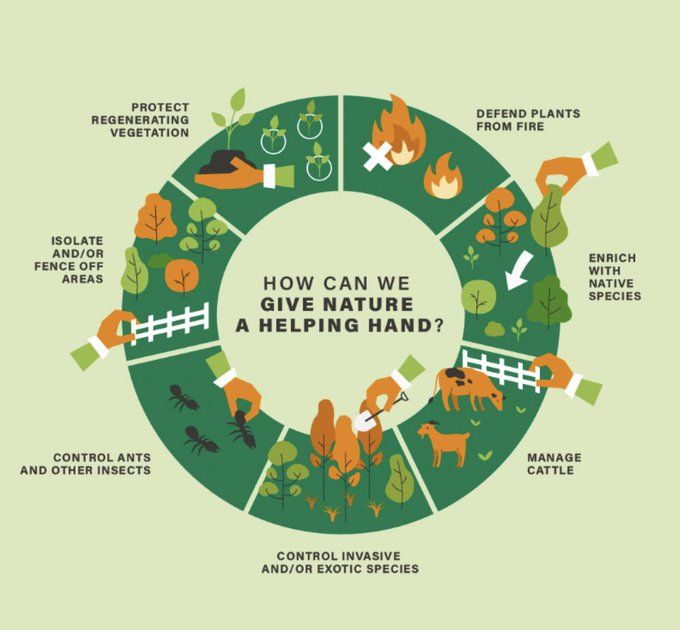
ANR is a flexible restoration approach and could be adapted to various contexts and objectives. A set of ecosystem restoration techniques are being facilitated, to eliminate obstacles to plant growth and survival. Those could vary depending on a range of factors, such as location, land type, restoration goal, etc. Hence, local community engagement is crucial for successfully implementing and managing ANR. Their knowledge of the land and ancestral traditions offers the best indication of what techniques and practices would be most beneficial. The most common ANR techniques are visualized in the figure below.

(source)

In comparison to other regeneration techniques such as tree-planting campaigns, ANR has comparatively low implementation and maintenance costs. The method could be applied on a local and larger scale level, with some areas and contexts being more favorable than others when it comes to implementation (see Requirements). However, where implemented, ANR can create jobs and bring income to local communities, as the implementations would require establishment and maintenance.

Stone Lines

Similar names: Cordons pierreux, stone bunds.

Stone lines are stones grouped in the shape of a line and placed along contours. The stones can be of different sizes. The goal of these lines is to conserve the soil and reduce runoff, as they are used to slow down water runoff and break its velocity. Hence, they increase infiltration and retain sediment and seeds to make water and nutrients available for crops. Stone lines are most suitable for water harvesting on slightly sloping plains (up to 5%) in semi-arid regions. For slopes starting from 5%, stone bunds can be used (see Eyebrow Terraces).

Stone lines are an easy and cheap intervention if stones are available in the immediate surroundings. This intervention is widely used in Africa, both in dry and humid areas. Moreover, stone lines are often used in combination with Zai Pits intervention for the rehabilitation of degraded and crusted lands. It is applied in semi-arid areas, on sandy and loamy soils where the slope is lesser than 5%. A great example can be seen in Niger, where the combination of the two techniques is applied to capture runoff, making infiltration more efficient and improving nutrient availability. The pits have a diameter of 20-30 cm, and a depth of 20-25 cm and are spaced about 1 m apart in each direction. Stone lines are spaced 20-25 m apart on slopes of 2-5%. With this layout, stone lines are usually quite small, three stones wide and only one stone high, and they are placed by hand along the contour lines. Very often grass grows between the stones leading to a greater infiltration and helping the accumulation of fertile sediments. Maintenance-wise, stone lines need to be repaired annually, in particular after heavy precipitation events.

Zai Pits

Similar names: Chololo pits (Tanzania), Zaï pits (Burkina Faso), tassa (Niger), agun pits (Sudan), kofyarpits (Nigeria), yamka (Kyrgyzstan), planting pits.

Zai Pits are small basins in which the seeds of annual or perennial crops are planted. The pits are then filled with Mulch, manure, compost or good soils to increase soil fertility and the capacity of the soils to retain water. Zai Pits can be beneficial for soil conditions and they are a very successful method which can allow for the growth of vegetation in dry areas. They are also very efficient in protecting seeds and soil organic matter from being washed away from water runoff. One of the major advantages of Zai Pits is that it increases water filtration, through the collection and concentration of water for the plants due to increasing termite activity. Moreover, Zai Pits can collect more than 25% or more of run-off water. This decreases water run-offs and evaporation. When looking at the bigger picture, Zai Pits can improve soil fertility and agricultural productivity of several crops and can increase production by up to 500% if well executed.

Zai Pits are an efficient method to increase yield productivity due to more water and nutrients available. This intervention is most suitable for flat or gently sloped terrains (0-5%) with a precipitation range of 350-600 mm/y.  Zai Pits can also work with other techniques such as stone contours and hand-dug trenches.

Watch this video for a clear explanation of how Zai Pits function and the benefits they offer.

This instruction video guides you through the step-by-step process of implementing Zai Pits in the field.

Semi-Circular Bunds

Similar names: Demi-Lunes, Banquettes, Boomerangs, Water Bunds, Earth Bunds, Earthworks, Micro Basins, Half-Moons, Earth Smiles

The technique of creating Semi-Circular Bunds belongs to the overall category of water harvesting interventions and consists of half-moon-shaped basins dug in earth. The main goal of water harvesting, as the name suggests, is to collect water, and to make moisture available for vegetation for a longer time. This type of micro-catchment water harvesting technique is suitable for slopes up to 15%, however Bunds made of earth are seldom used in areas with slopes greater than 5% with a precipitation rate higher than 300 mm/y. At lesser slopes, Semi-Circular Bunds are also used in areas with higher rain falls.

Semi-Circular Bunds are a low cost intervention, where the time requirements of bund construction are very low as they can be implemented very fast, especially when the raw materials (plant residues) are available. The intervention also allows for the cultivation of plants and species that would not grow in previously dry conditions. Overall, the direct benefits of Semi-Circular Bunds can be realised in the short term and often after one year of implementation.

Watch this bunds instruction video for step-by-step guidance on how to implement them effectively.