Riparian Buffer Zones

Similar names: Conservation buffers, Stream corridor bank enhancement, Riparian buffer strips and hedges, Terrestrial buffers, Riparian buffer systems

Riparian buffer zones are the interface between land and a river, stream or creek often characterised by riparian woodlands, forests and riparian strips. The plant habitats and natural communities along the river banks are better known as riparian vegetation and they are characterised by hydrophilic plants, bushy vegetation and forest systems. The presence of riparian buffer zones is crucial due to their role as natural biofilters and their protection of aquatic environments from excessive sedimentation, polluted surface runoff and erosion. Furthermore, they provide shelter, shade and food for many aquatic species.

Often the riparian zones are damaged by various anthropogenic activities such as agriculture, construction and silviculture. In this case, biological restoration can take place, with the most common practices being erosion control and revegetation. Furthermore, in some places riparian zones are fully lacking and reintroducing them could bring plenty of benefits to the local ecosystems. Because of the great biological function these systems have in supporting a diversity of species and landscapes, they are in some places subject to national protection mechanisms.

Initiating and restoring riparian buffers is crucial for the healthy functioning of riparian ecosystems. The vegetation around the banks of the river slows the flow of water which controls the power of the river and the destruction that could occur downstream. When near agricultural land, the riparian buffers filter various pollutants from agricultural runoffs, enhancing water quality via biofiltration. 

Disclaimer: Check whether Riparian Buffer Zones are subject to national protection in your area, as this could help with their protection and restoration.
Muvuca Direct Seeding

Similar names: Seed-based land restoration, Direct sowing

Muvuca direct seeding is a nature restoration method, where a mix of seeds from dozens of native species at different successional stages are planted simultaneously into the ground. The method mimics natural regeneration mechanisms such as seed soil banks and seed rain. Better known conventional practice is direct seeding’s popular counterpart – transplanting, which is a technique of moving plants from one location to another, usually to preserve the optimal condition of the seedlings. Despite providing more control over the plant’s growth, transplanting doesn’t allow for a high variety of plant seeds to grow simultaneously.

The Muvuca system uses a high diversity of species and ensures longer-term operational efficiency, which in return enables mechanised restoration with reduced planting, low maintenance in terms of time and reduced costs. Planting can be done either manually or mechanised (using machinery such as tractors), which enables the scalability of the intervention. Furthermore, the grown plants through Muvuca become more robust and resistant to various weather conditions, which results in stronger root systems and overall healthier vegetation. Overall, Muvuca direct seeding can contribute to the scaling up of restoration efforts, while reducing costs and increasing the species diversity. Meanwhile, the demand for native species enables the promotion of conservation and well-being.

Composting

Similar names: Organic Amendments

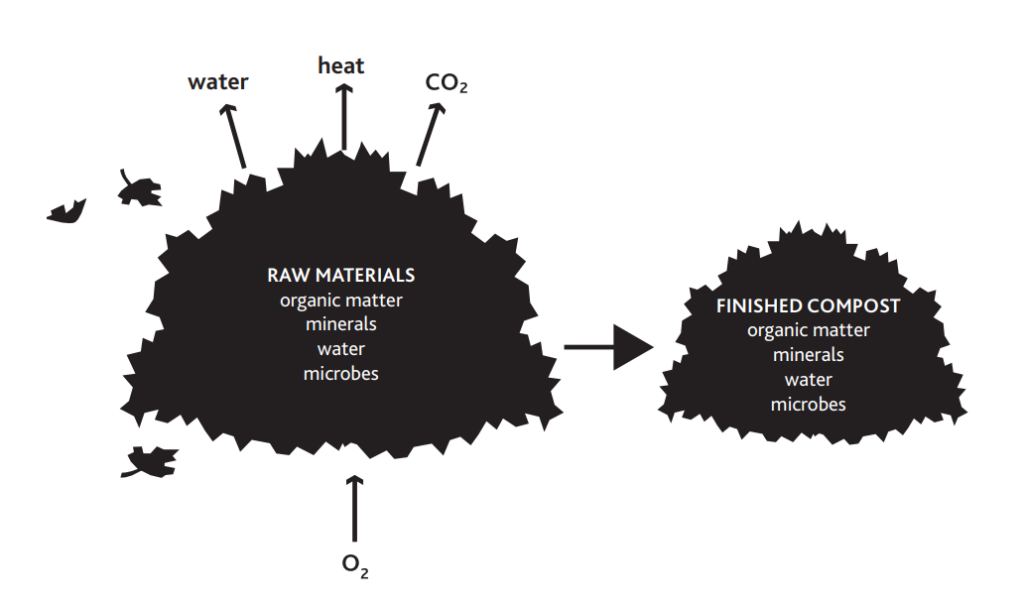
Composting is an effective method of organic waste management, involving the controlled aerobic decomposition of organic matter, such as plant and animal waste. This process results in Compost, a stable, humus-like material that can be directly applied to soil. The primary goal of Composting is to reduce the amount of organic waste sent to landfills while providing economic, environmental, and social benefits. When used in soil, Compost enriches it, reducing the need for chemical fertilizers and lowering potential methane emissions from landfills.

The Composting process (Source)

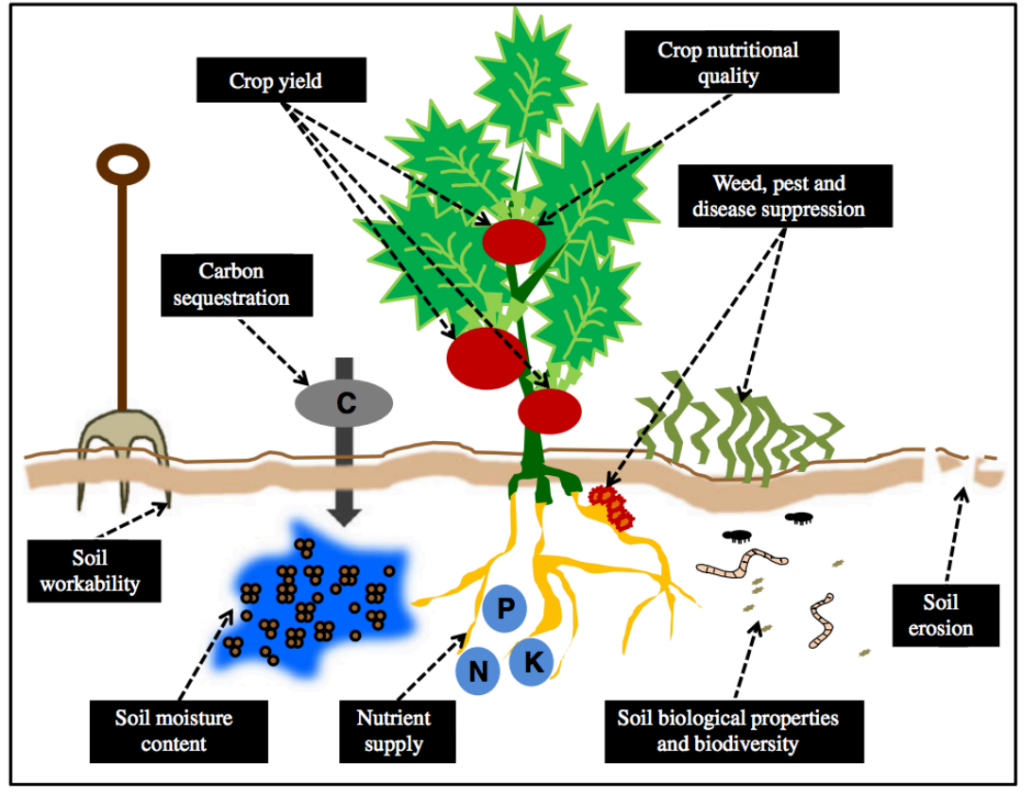
Due to its recycling nature, Composting is a cost-effective tool for managing organic waste, utilizing leftover materials from land-based processes. It offers a range of co-benefits that enhance land and soil regeneration practices. Agronomically, Composting supports crop yields, improves soil moisture content and workability, enhances crop nutritional quality, and suppresses weeds, pests, and diseases. Additionally, Composting provides broader environmental benefits by supplying essential nutrients (such as mineralized nitrogen, phosphorus, and potassium), reducing soil erosion, sequestering carbon, and improving soil biological properties and biodiversity.

Furthermore, Compost can be used as a mulching material in landscaping, garden management, and the restoration of abandoned quarries, among other applications.

Agricultural benefits of Composting (Source)

Assisted Natural Regeneration

Similar names: Pruning, Kisiki Hai, Managed Regrowth

Assisted Natural Regeneration (ANR) is a simple, low-cost forest restoration method that can effectively convert deforested and degraded lands into productive forests and rangelands. The method uses a blend of active planting and passive restoration techniques, which help vegetation to naturally recover by eliminating barriers and threats to their growth. ANR is similar to Farmer-Managed Natural Regeneration (FMNR), with the difference that ANR applies to degraded forest lands and rangelands while FMNR is usually practised on croplands. Overall, ANR mimics the natural systems and habitats by supporting the land processes through ANR. 

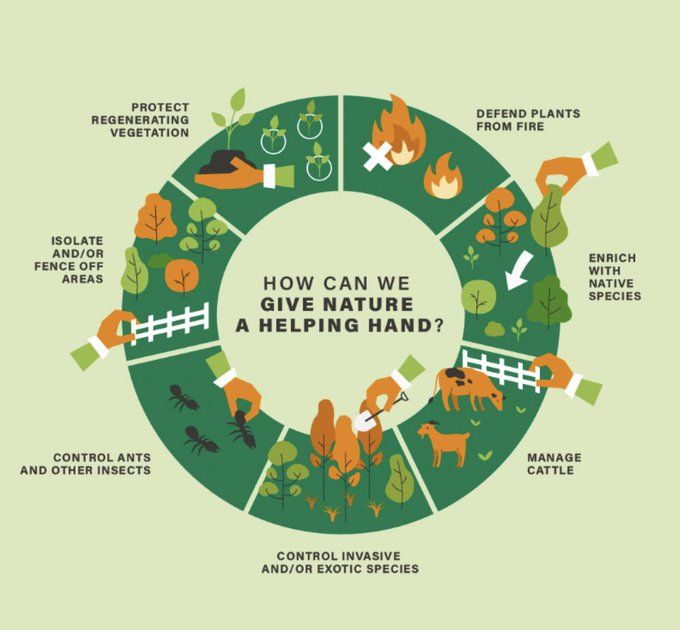
ANR is a flexible restoration approach and could be adapted to various contexts and objectives. A set of ecosystem restoration techniques are being facilitated, to eliminate obstacles to plant growth and survival. Those could vary depending on a range of factors, such as location, land type, restoration goal, etc. Hence, local community engagement is crucial for successfully implementing and managing ANR. Their knowledge of the land and ancestral traditions offers the best indication of what techniques and practices would be most beneficial. The most common ANR techniques are visualized in the figure below.

(source)

In comparison to other regeneration techniques such as tree-planting campaigns, ANR has comparatively low implementation and maintenance costs. The method could be applied on a local and larger scale level, with some areas and contexts being more favorable than others when it comes to implementation (see Requirements). However, where implemented, ANR can create jobs and bring income to local communities, as the implementations would require establishment and maintenance.

Negarim

Similar names: diamond-shaped micro catchment, V-shaped micro catchment, V-shaped bunds, Triangular bunds, small run-off basins

Negarim is an intervention that consists of small runoff micro basins characterised by a diamond shape, bound by low earth bundles. This water harvesting technique is mainly used for growing trees and bushes in arid and semi-arid areas but, as a side effect, it also preserves soil from erosion. It works great with rainfall rates starting from 150 mm/y and can be applied on slopes of up to 15%. This technique is more suitable for small-scale tree-planted areas and is pretty easy to create. Since Negarim mostly targets tree- and bush-planting, the area in which this technique is performed should be characterised by a soil depth of at least 1.5 metres, but preferably 2m. This is to ensure enough space for the roots to develop and for adequate storage of the water harvested.

The technique was originally developed in the Negev desert in Israel; in fact, the word Negarim comes from “Neger”, the Hebrew word for runoff. Nonetheless, the first report of this water harvesting technique comes from the south of Tunisia. This microcatchment system is widely spread in Israel, especially among research farms in the Negev desert where the yearly amount of rainfall reaches 100-150 mm. However, Negarim and its variations are well known, and used also, in other arid and semi-arid areas like in North- and Sub-Saharan Africa.

Zai Pits

Similar names: Chololo pits (Tanzania), Zaï pits (Burkina Faso), tassa (Niger), agun pits (Sudan), kofyarpits (Nigeria), yamka (Kyrgyzstan), planting pits.

Zai Pits are small basins in which the seeds of annual or perennial crops are planted. The pits are then filled with Mulch, manure, compost or good soils to increase soil fertility and the capacity of the soils to retain water. Zai Pits can be beneficial for soil conditions and they are a very successful method which can allow for the growth of vegetation in dry areas. They are also very efficient in protecting seeds and soil organic matter from being washed away from water runoff. One of the major advantages of Zai Pits is that it increases water filtration, through the collection and concentration of water for the plants due to increasing termite activity. Moreover, Zai Pits can collect more than 25% or more of run-off water. This decreases water run-offs and evaporation. When looking at the bigger picture, Zai Pits can improve soil fertility and agricultural productivity of several crops and can increase production by up to 500% if well executed.

Zai Pits are an efficient method to increase yield productivity due to more water and nutrients available. This intervention is most suitable for flat or gently sloped terrains (0-5%) with a precipitation range of 350-600 mm/y.  Zai Pits can also work with other techniques such as stone contours and hand-dug trenches.

Watch this video for a clear explanation of how Zai Pits function and the benefits they offer.

This instruction video guides you through the step-by-step process of implementing Zai Pits in the field.

Semi-Circular Bunds

Similar names: Demi-Lunes, Banquettes, Boomerangs, Water Bunds, Earth Bunds, Earthworks, Micro Basins, Half-Moons, Earth Smiles

The technique of creating Semi-Circular Bunds belongs to the overall category of water harvesting interventions and consists of half-moon-shaped basins dug in earth. The main goal of water harvesting, as the name suggests, is to collect water, and to make moisture available for vegetation for a longer time. This type of micro-catchment water harvesting technique is suitable for slopes up to 15%, however Bunds made of earth are seldom used in areas with slopes greater than 5% with a precipitation rate higher than 300 mm/y. At lesser slopes, Semi-Circular Bunds are also used in areas with higher rain falls.

Semi-Circular Bunds are a low cost intervention, where the time requirements of bund construction are very low as they can be implemented very fast, especially when the raw materials (plant residues) are available. The intervention also allows for the cultivation of plants and species that would not grow in previously dry conditions. Overall, the direct benefits of Semi-Circular Bunds can be realised in the short term and often after one year of implementation.

Watch this bunds instruction video for step-by-step guidance on how to implement them effectively.

Exclosures & Enclosures

Enclosures are fencing structures that restrict animal and human access to land with the goal of supporting the regeneration or protection of said land. Enclosures also refer to the practice of fencing-off an area in order to protect it from human use and animal intrusion. The main goal of Enclosures through fencing is to allow natural regeneration and rehabilitation of degraded lands within the enclosed space. This intervention fosters natural regeneration and helps to restore organic matter and a healthy soil structure. Enclosures can also be used to change the cover of the land to allow time for new land coverage (vegetation) to be established. Enclosures can be applied in a variety of different landscapes and environmental conditions. This technique is a relatively cheap intervention if the materials are available on site but can be somewhat more expensive where materials need to be acquired or where more sophisticated Enclosures are built. Fencing could be done for a permanent or temporary use, and this is defined by the goal of the project. 

Some of the major features of Exclosures and Enclosures are the economic benefits linked to the environmental benefits coming as a result of their implementation. Firstly, the increased vegetation that comes as a result of fencing increases vegetation which in return enhances water-retention capacity of soil. This helps to both replenish the nutrients in the soil and to restore the ability of the soil to retain water.  Furthermore, the enhanced water retention capacity of the soil reduces the exposure to flood damage. When it comes to agriculture, Enclosures and Exclosures improve long-term returns from crop production and pastureland, as the long-term productivity of the land is improved by improved and regenerated soils. This helps to increase crop yields quality. Exclosures and Enclosures can increase security of land tenure and make property rights clearer due to clear demarcations of the boundaries of your land. This can, in turn result in a higher willingness to invest in the land. Finally, Enclosures and Exclosures provide an opportunity for complimentary economic activities to be realised, such as harvesting grass (‘cut and carry’), extraction of wood, or growing of fruits and vegetables. Growing additional crops can also increase and diversify income streams and contribute to enhanced food security.

Grazing Management

Sustainable Grazing Management is about managing pasture and livestock in a way that prioritizes the long-term capability of a landscape. Its goal is to maintain healthy and productive pasturelands and provide economic benefits, and can be applied to range, pasture, and grasslands in all types of topographies and climates. The way grasslands are managed both directly and indirectly impacts the ecological health of the surrounding ecosystem, including the local water and mineral cycles as well as biological succession, in turn also creating socioeconomic effects for farmers and herders.

As opposed to more traditional and unsustainable practices such as extensive or continuous grazing where livestock graze on one large, open pastureland, there are several methods of more sustainable Grazing Management. Two examples of this are Rotational Grazing Management and Integrated crop-livestock grazing.

Farmer Managed Natural Regeneration

Similar names: treecovery, natural regeneration, tree-based regeneration, Kisiki Hai

Natural regeneration is a biological process that can be assisted and managed by farmers and landowners to increase the recovery of native ecosystems and their functions. Usually practised on wooded agricultural land, Farmer Managed Natural Regeneration (FMNR) is an approach that aims to increase the number of trees by protecting, managing and pruning existing tree and shrub stumps and roots to create the optimal conditions for them to flourish and germinate seeds again. 

An advantage of FMNR is the freedom that farmers have in implementing and adapting this technique to their specific landscape. Farmers can make decisions based on their knowledge and experience and choose which tree species they want to target, for example, fruit trees. Farmers can also select which species they want to save or remove during the pruning process, as well as when and what preferred tree density they want.

Learn the four steps of FMNR in the below instruction video: